Terri's emotional support animal letter
A Dog's Way HomeTerri's emotional support animal letter turns Bella's support for Terri from a relationship recognized by family and hospital visitors into a claim Lucas can put before their housing provider. Its significance lies both in what it makes possible—the Fair Housing Act accommodation for emotional support animals—and in what it cannot do: it does not certify Bella as a trained seizure-alert dog or exempt her from the VA hospital's rules.
Purpose and scope
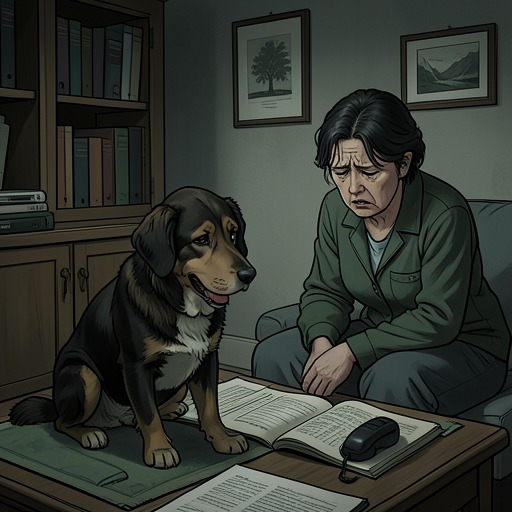
Lucas seeks the letter as the apartment's no-pets clause threatens the household. With only three days before proceedings are due to begin, he asks whether a doctor can document Bella's importance to Terri. The request arises from more than the dog's companionship at home. At the VA, Bella has spent time among people who welcome her, and she has comforted Mack when he is distressed. Ty also describes her calming effect on people in the ward and in a twelve-step group, where participants pet her before speaking. These experiences help establish why Lucas regards Bella as essential to Terri's well-being, but they are not themselves a formal certification.
The legal distinction matters. Lucas has observed Bella bark before two of Terri's recent seizures and hopes that a better understanding of these warnings would let the family prepare. Dr. Sterling explains that seizure-alert dogs exist and that many are trained to signal, while Bella's signaling appears innate. He cannot certify her as a trained seizure dog, and the physician is initially unsure how involved that process would be. The letter therefore does not confirm a specialized training or seizure-alert status. It addresses a different need: Terri's emotional support.
How the letter is obtained
Ty presses Dr. Sterling to consider Bella's practical effect on people, not merely the limits of what can be formally certified. He says she helps reduce stress on the ward, gives newcomers in the twelve-step group confidence, and is valued by those who interact with her. Lucas adds the family's concern about Terri's seizures and her depression. When Dr. Sterling asks whether Bella helps with the depression, Lucas confirms that she does.
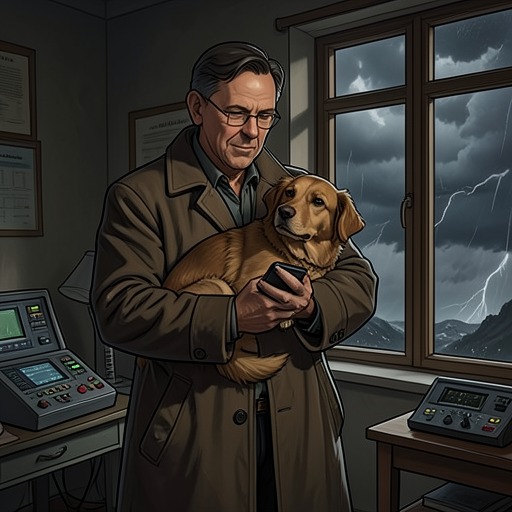
Dr. Sterling then distinguishes the documentation he cannot provide from the letter he can. He will not attest that Bella is a seizure dog, since she has not been trained for that role. But, as he understands the Fair Housing Act, a letter from a doctor currently treating Terri is sufficient for Bella to be considered an emotional support animal. He writes it immediately, using a pencil on a piece of paper. The document is thus produced through a narrow but consequential judgment: it describes Bella's relationship to Terri without claiming that she has received specialized training.
Lucas responds with gratitude and asks whether the letter will allow them to remain in the apartment. Dr. Sterling says he is not an attorney, but his reading of the law appears to indicate that the building must make an exception. His answer is cautiously hopeful rather than a guarantee of a particular outcome. The letter supplies documentation for the family's request; the scene does not establish the final decision of the housing provider.
Limits and later use
Dr. Sterling makes clear that the letter is not a universal permission slip. It does not authorize Bella to accompany Ty or Lucas at the VA: the VA hospital policy barring employees from bringing pets to work still applies to her as an emotional support animal. Dr. Sterling warns Ty that Bella's presence there remains against the rules and that a seizure dog might be treated differently. The distinction preserves the letter's limited purpose: it concerns Terri's housing accommodation, not every institution or setting in which Bella might provide support.
The letter later becomes something Lucas can offer as evidence when a man challenges Bella's status and identifies her as a pit bull. Lucas politely asks whether the man wants to see the doctor's letter, then, after the classification is stated, replies that they have it. The exchange shows that the document travels with the family as a concrete answer to one part of the conflict, even though the scene does not show it resolving the dispute over Bella's breed classification. Its existence does not erase the threat posed by the apartment clause or settle every rule governing her presence elsewhere.
Significance
The letter gives institutional form to support that the story has already shown through ordinary encounters. Bella sits with people who welcome her, and she approaches Mack because she recognizes his sadness and remembers comforting Terri in similar moments. Lucas also points to her apparent warnings before Terri's seizures. Yet the paper does not collapse those different actions into one official role: emotional support, seizure alert, and permission to enter the VA remain distinct categories with distinct requirements.
That separation is central to the document's importance. Bella's value to Terri and the people around her is established through lived experience, while access to housing depends on a doctor translating part of that experience into an administratively legible letter. The paper helps Lucas contest the idea that Bella is merely a pet under the apartment's rules, but its carefully bounded authority also exposes how support can be recognized in one context and barred in another.